

The quiet revolution in medical device warehousing nobody’s talking about
Isotope Innovations >> Health>> The quiet revolution in medical device warehousing nobody’s talking about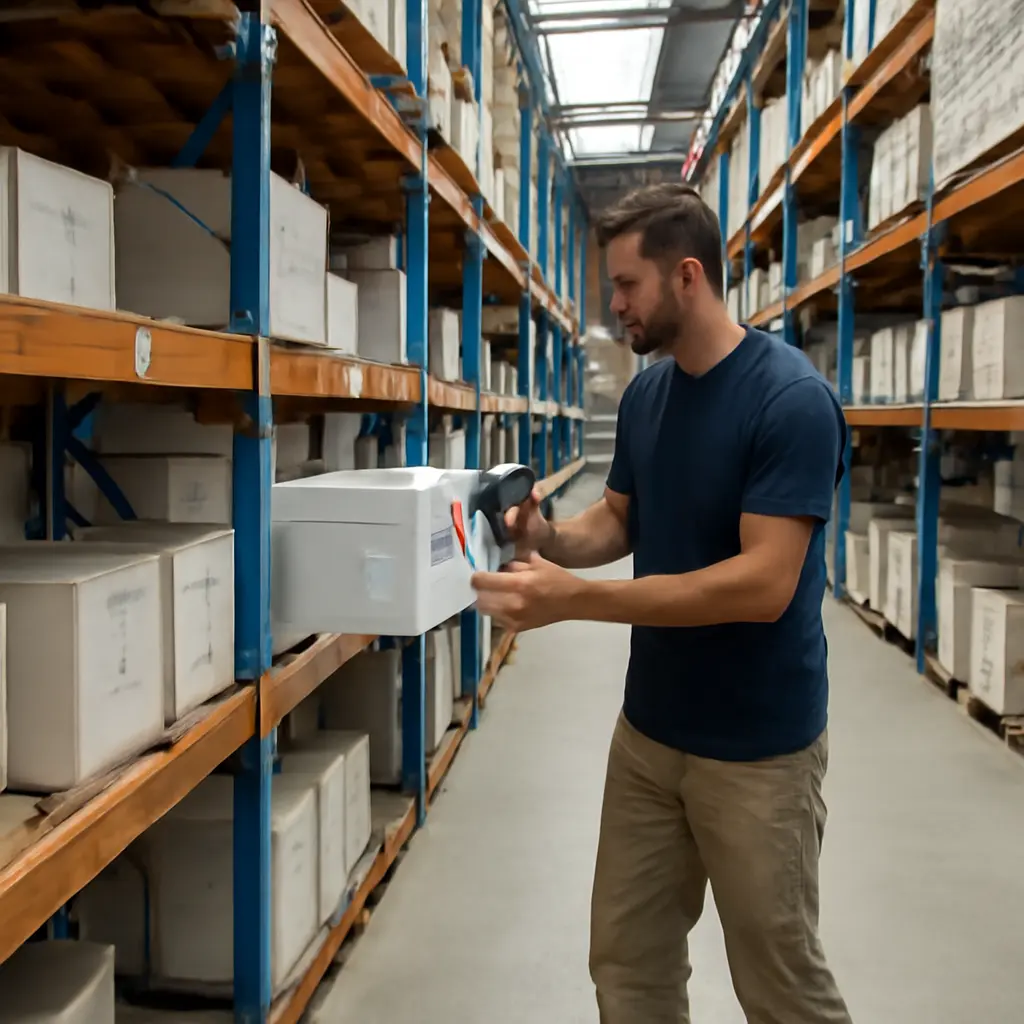
The quiet revolution in medical device warehousing nobody’s talking about
Medical device warehousing is the controlled storage and movement of products such as implants, diagnostic equipment, and sterile instruments. Its quiet revolution is the shift from treating warehouses as passive storage space to managing them as traceable, risk-controlled parts of the healthcare supply chain. Driven by stricter quality expectations, product complexity, and digital tracking, this change links environmental monitoring, inventory visibility, and regulatory controls—while making reliable fulfillment a patient-safety concern, not just an operating metric.
Medical Device Warehousing: From Storage to Quality-System Control
There is no single regulatory definition of “medical device warehousing.” In practice, it describes the facilities, procedures, people, and information systems used to receive, store, protect, identify, and distribute medical devices. The U.S. Food and Drug Administration (FDA) establishes requirements for device quality systems, while the International Organization for Standardization’s ISO 13485 standard sets quality-management requirements for organizations involved in medical devices. Together, these frameworks make storage conditions and distribution controls part of a device’s quality history.
The scale makes the issue consequential. The World Health Organization estimates that around one in ten medical products in low- and middle-income countries is substandard or falsified, although that estimate covers medical products broadly—not just devices or warehouse failures. It underscores why supply-chain integrity, product identification, and documented handling matter. For device operations, the relevant measures include inventory accuracy, environmental excursions, order traceability, damage rates, and time to retrieve affected lots.
Quality management and distribution controls
A quality-managed warehouse applies documented procedures to product receipt, inspection, storage, picking, packing, shipment, and returns. FDA’s Quality Management System Regulation (QMSR), which became effective on February 2, 2026, incorporates ISO 13485:2016 by reference and updates the U.S. framework for device quality management. The regulation does not mean every warehouse is automatically a separately certified facility; responsibilities depend on the organization’s role and applicable requirements. Manufacturers and logistics partners should define those responsibilities contractually and maintain evidence that handling controls are followed.
Risk-based storage and product protection
Risk-based storage means setting controls according to a device’s characteristics and the consequences of damage or deterioration. A sterile implant, temperature-sensitive reagent, bulky imaging component, and reusable surgical instrument do not share identical storage needs. Controls can include temperature and humidity limits, protection from light or moisture, segregation of damaged or returned goods, access restrictions, and inspection of packaging integrity. The appropriate limits should come from product labeling, validated handling instructions, and documented risk assessment—not from a generic “medical-grade warehouse” label.
Traceability: The Information Layer of Medical Device Warehousing
Once physical handling is controlled, the next challenge is knowing exactly what is in the building and where it has gone. Traceability is the ability to connect a device or lot to its identity, location, status, and movement history. In the United States, the FDA’s Unique Device Identification (UDI) system is intended to identify devices through distribution and use. The FDA’s Global Unique Device Identification Database (GUDID) contains device identification information; it is not, by itself, a live inventory or shipment-tracking system.
UDI, lot, and serial-number control
UDI-based workflows capture the device identifier and, when applicable, production identifiers such as lot number, serial number, and expiration date. Scanning these identifiers at receipt, put-away, picking, and dispatch reduces reliance on manual transcription and supports targeted investigations or recalls. The FDA’s UDI rule established a phased implementation schedule, with requirements varying by device class and other factors. Warehouses should therefore design processes around the applicable device and market rather than assume one identification rule covers every product.
Inventory systems and event records
Warehouse management systems (WMS) and enterprise resource planning (ERP) platforms can record stock status, location, expiry, and transaction history. Radio-frequency identification (RFID), barcode scanning, and connected sensors add ways to capture movement or environmental conditions. These technologies are useful only when records are accurate, systems are validated for their intended use, and exceptions trigger action. A dashboard showing a reading is not a control unless someone is accountable for assessing and resolving an out-of-range event.
Environmental Monitoring and Cold-Chain Readiness
Environmental monitoring is the measurement and documentation of conditions that could affect product quality. It can include temperature, humidity, light exposure, and, where relevant, shock or vibration. Not every medical device requires refrigerated storage, and “cold chain” should not be treated as a universal device requirement. Warehouses must follow the storage conditions specified for each product and validate that their monitoring and response procedures can protect it.
Sensors, mapping, and excursion response
A robust monitoring program combines calibrated sensors, appropriate sensor placement, alarm limits, documented review, and an excursion-response procedure. Temperature mapping can help identify warmer or colder zones before products are placed into storage. If an excursion occurs, staff need a defined process to quarantine affected stock, assess exposure against product-specific evidence, document the disposition decision, and notify the relevant quality owner. The European Union’s Good Distribution Practice guidelines for medicinal products provide a useful model for distribution risk controls, but medicines rules should not be presented as automatically applying to every medical device.
Packaging, handling, and transport continuity
Warehouse controls extend beyond the shelf. Packaging can protect sterility, cleanliness, and physical function, while suitable handling practices reduce crushing, drops, vibration, and contamination risks. For products requiring controlled temperatures, transport plans should define packaging qualification, monitoring, handoff responsibilities, and procedures for delays. The FDA’s guidance on sterile medical devices processed by health care facilities also emphasizes following manufacturers’ instructions for use; it is a reminder that product protection depends on maintaining the conditions and instructions relevant to the device throughout its lifecycle.
Automation and the Changing Warehouse Workforce
Automation in medical device warehousing includes barcode-directed workflows, automated storage and retrieval, conveyors, robotic picking, and analytics that flag unusual inventory or demand patterns. Its purpose is not simply to replace labor. Properly designed automation can improve repeatability and reduce unnecessary handling, but it also introduces software, equipment, cybersecurity, and business-continuity risks that need controls and oversight.
Automation with human oversight
Automation is most effective when routine actions are standardized and exceptions remain visible to trained staff. A system may direct an operator to a location, but a person or validated inspection step may still need to confirm packaging condition, product identity, or an unusual return. The FDA’s QMSR alignment with ISO 13485 reinforces the importance of documented processes and risk-based controls; it does not make a particular automation technology mandatory. Organizations should validate software and equipment for their intended use and plan for manual or alternate workflows during outages.
Skills, ergonomics, and operational resilience
As systems become more connected, warehouse roles increasingly combine practical handling knowledge with data discipline: employees must scan correctly, recognize exceptions, follow quarantine procedures, and understand escalation paths. Training, clear work instructions, ergonomic layout, and staffing plans help prevent errors while supporting resilience during demand spikes or system interruptions. The U.S. Bureau of Labor Statistics projects employment of logisticians to grow 19% from 2023 to 2033, far faster than the average for all occupations. That figure concerns logisticians across industries, not medical device warehouse jobs specifically, but it reflects the broader importance of supply-chain expertise.
How to Measure the Revolution in Practice
The strongest evidence of progress is not the number of scanners or robots installed; it is whether controls produce more reliable outcomes. A practical performance dashboard can combine quality, service, and resilience measures. The figures should be defined consistently, reviewed over time, and interpreted alongside product mix and operating conditions.
- Inventory accuracy: the share of audited stock records that match physical counts, including lot and serial details where required.
- Traceability completeness: the proportion of sampled orders with a documented chain of identity, location, and movement.
- Environmental excursions: the number, duration, and disposition of out-of-range events, analyzed by product and storage zone.
- Order and recall performance: fulfillment accuracy, time to locate affected stock, and time to complete a targeted withdrawal or customer notification.
- Damage and returns: rates of packaging damage, product quarantine, and returned goods awaiting documented assessment.
A useful visual is a monthly control chart plotting environmental excursions and inventory discrepancies beside order volume. Another is a process map showing the handoffs from supplier receipt to customer delivery, with each scan, inspection, and decision point marked. These visuals can expose weak links that a facility-wide average conceals.
Conclusion: Warehousing as Patient-Safety Infrastructure
Medical device warehousing is changing through the convergence of quality-system controls, product traceability, environmental monitoring, and carefully governed automation. The central shift is conceptual: storage and distribution are no longer back-office functions detached from product quality. They help preserve device identity and condition, support timely investigations, and keep clinically important products available.
For manufacturers, distributors, and healthcare organizations, the next step is to map responsibilities across the supply chain, verify product-specific storage requirements, test traceability through realistic exercises, and review performance data for recurring exceptions. Better warehouses are not defined by technology alone; they are defined by dependable processes that protect products and make problems visible before they reach patients.
Sources: U.S. Food and Drug Administration, Quality Management System Regulation (QMSR), https://www.fda.gov/medical-devices/quality-system-qs-regulation-medical-device-good-manufacturing-practices/quality-management-system-regulation-qmsr; International Organization for Standardization, ISO 13485:2016 Medical devices—Quality management systems, https://www.iso.org/standard/59752.html; World Health Organization, Substandard and falsified medical products, https://www.who.int/news-room/fact-sheets/detail/substandard-and-falsified-medical-products; U.S. Food and Drug Administration, Unique Device Identification System, https://www.fda.gov/medical-devices/device-advice-comprehensive-regulatory-assistance/unique-device-identification-system-udi-system; U.S. Food and Drug Administration, Global Unique Device Identification Database (GUDID), https://www.fda.gov/medical-devices/unique-device-identification-system-udi-system/global-unique-device-identification-database-gudid; European Commission, Guidelines of 5 November 2013 on Good Distribution Practice of medicinal products for human use, https://health.ec.europa.eu/system/files/2016-11/2013_c343_01_en_0.pdf; U.S. Food and Drug Administration, Reprocessing Medical Devices in Health Care Settings: Validation Methods and Labeling, https://www.fda.gov/regulatory-information/search-fda-guidance-documents/reprocessing-medical-devices-health-care-settings-validation-methods-and-labeling; U.S. Bureau of Labor Statistics, Occupational Outlook Handbook: Logisticians, https://www.bls.gov/ooh/business-and-financial/logisticians.htm.
Related Post

Radiopharmaceuticals Explained What Doctors Wish Patients Knew
Radiopharmaceuticals are medicinal products that contain a radioactive atom and are used to diagnose disease…