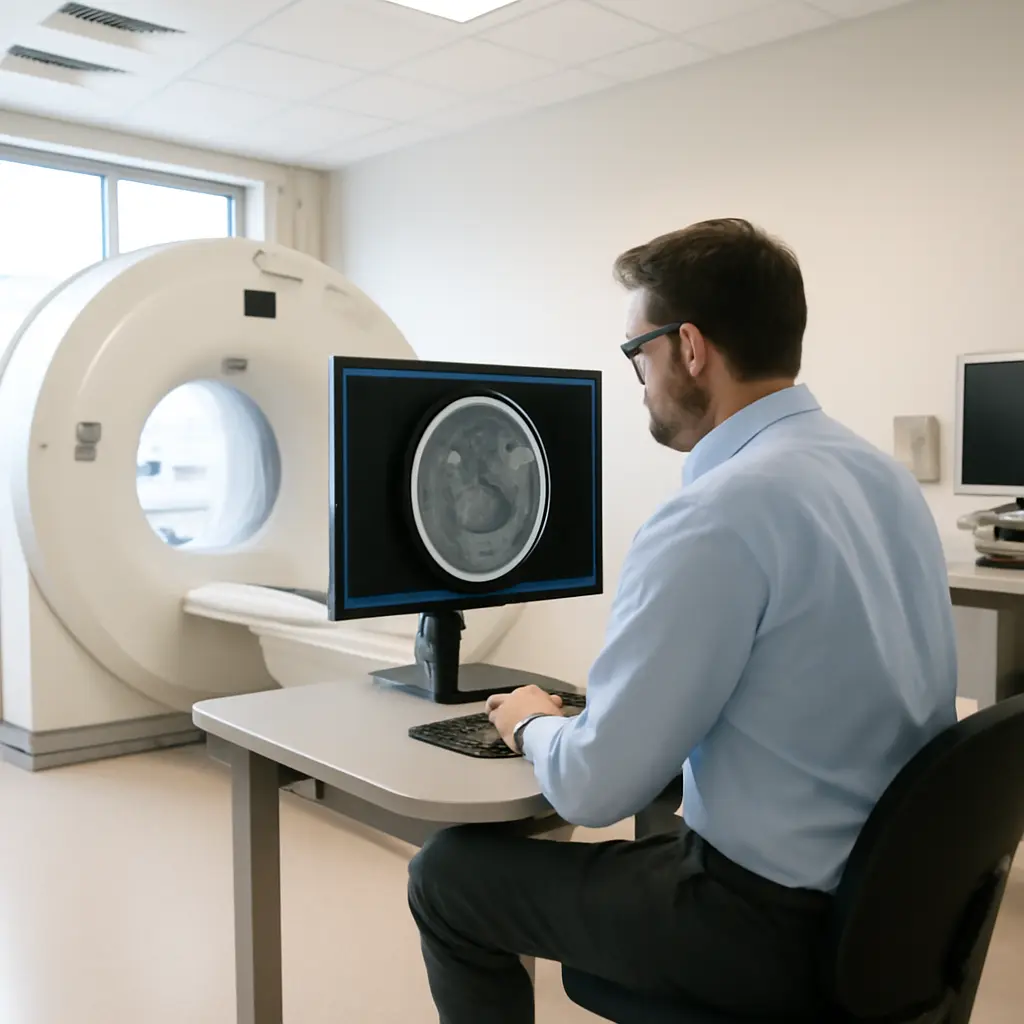
Scanning Too Late Costs More Than Money, Ask Any Oncologist
Isotope Innovations >> Health>> Scanning Too Late Costs More Than Money, Ask Any Oncologist
Scanning Too Late Costs More Than Money, Ask Any Oncologist
Cancer screening looks for certain cancers in people who do not have symptoms; diagnostic testing investigates symptoms or an abnormal screening result. Waiting too long to get an appropriate test can mean losing an opportunity to find a cancer earlier, when treatment may be more effective—but the consequences depend on the cancer, the test, and the individual. Screening is not a guarantee of prevention or survival, and not every scan is a screening test. Evidence from the National Cancer Institute and major screening trials supports timely, guideline-based screening for selected groups, while also showing risks such as false alarms and overdiagnosis. Understanding who benefits, what delays can change, and how to act on an abnormal result helps patients make informed decisions with their clinicians.
Timely cancer screening means testing the right people at the right interval
The National Cancer Institute (NCI) describes screening as checking for disease when a person has no symptoms. In cancer care, the term covers several different tests—not just imaging scans—including mammography, stool-based tests and colonoscopy, cervical HPV or Pap tests, and low-dose computed tomography (CT) for certain people at elevated risk of lung cancer. A scan ordered because someone has symptoms is generally a diagnostic test, not routine screening.
“Too late” does not have one universal definition. It may mean starting screening after the age or risk threshold recommended for a person, missing an advised interval, postponing evaluation of a concerning symptom, or failing to follow up an abnormal result. The appropriate next step depends on personal risk, prior results, age, health status, and the particular cancer. The U.S. Preventive Services Task Force (USPSTF) recommendations are evidence-based guidance for defined populations; they are not a substitute for individualized clinical judgment.
Screening differs from diagnostic testing
Screening is intended for people without symptoms who meet criteria for a particular test. Diagnostic testing is used to investigate a symptom—such as a new breast lump—or clarify an abnormal screening finding. Diagnostic evaluation may include imaging, examination, laboratory tests, or biopsy. A person with symptoms should contact a clinician rather than wait for their next routine screening appointment.
Screening is specific to cancer and risk
There is no single scan that screens for every cancer, and routine whole-body imaging is not recommended for average-risk, symptom-free people as a general cancer-screening strategy. The American College of Radiology cautions that whole-body CT screening can expose people to radiation and uncover findings that lead to additional tests without proven overall benefit. Screening recommendations instead target particular cancers and populations where evidence supports a favorable balance of benefits and harms.
Timely cancer screening can improve the chance of finding disease at an earlier stage
The central potential benefit of screening is earlier detection of cancers for which earlier treatment can reduce the chance of dying from that cancer. NCI emphasizes that screening outcomes must be assessed carefully: finding a cancer earlier can lengthen the time a person is known to have the disease without changing when they would have died, a problem called lead-time bias. Screening studies therefore look at outcomes such as cancer-specific mortality, not just the number of cancers detected or the stage at diagnosis.
Breast screening: mammography and age-based guidance
The USPSTF recommends biennial mammography for women ages 40 through 74 at average risk of breast cancer. It states that evidence is insufficient to determine the balance of benefits and harms for routine screening mammography in women 75 and older, and for supplemental ultrasound or MRI solely because a person has dense breasts after a negative mammogram. Individual history—including genetic risk, prior chest radiation, and previous breast disease—may call for a different plan.
The NCI’s summary of the evidence notes that mammography can reduce breast-cancer deaths, while also producing false-positive results and detecting some cancers that would not have caused harm during a person’s lifetime. A late or missed mammogram does not establish that someone has cancer; it is a reason to discuss an appropriate catch-up schedule with a healthcare professional.
Colorectal screening: several effective test options
For adults ages 45 through 75, the USPSTF recommends colorectal cancer screening. Options include stool tests at recommended intervals and visual examinations such as colonoscopy. The right choice depends on preference, medical history, access, and whether the person can complete follow-up. A positive stool test requires colonoscopy for diagnostic evaluation; repeating a stool test instead of completing that follow-up does not resolve the abnormal result.
The American Cancer Society estimates that, in the United States, colorectal cancer is the second-leading cause of cancer death when men and women are considered together. Screening can detect precancerous growths as well as cancer, but benefits depend on completing the recommended test and subsequent evaluation.
Lung screening: low-dose CT for selected high-risk adults
The USPSTF recommends annual low-dose CT screening for adults ages 50 through 80 with at least a 20 pack-year smoking history who currently smoke or quit within the past 15 years. A pack-year is the equivalent of smoking one pack daily for one year. Screening is not recommended for everyone: it can generate false positives, expose patients to radiation, and lead to invasive follow-up procedures. A clinician should assess eligibility and whether a person is healthy enough to benefit from treatment if cancer is found.
Evidence for this targeted approach includes the National Lung Screening Trial, which reported a 20% relative reduction in lung-cancer mortality with low-dose CT compared with chest X-ray among the trial’s high-risk participants. That trial result applies to the studied population; it does not mean that every person who receives a CT scan gets a 20% personal reduction in risk.
Cervical screening: preventing cancer through testing and follow-up
Cervical screening uses tests for high-risk human papillomavirus (HPV), Pap tests that identify abnormal cells, or both, according to the applicable guideline and a person’s age and history. The USPSTF recommends screening for women ages 21 through 65 using age-appropriate methods and intervals. Screening can identify precancerous changes before they become invasive cancer, but an abnormal result needs follow-up as advised; it does not by itself mean cancer is present.
Delayed screening and delayed follow-up create different risks
A missed routine screening appointment and a delay after an abnormal result are not the same clinical situation. The first calls for a clinician’s advice on rescheduling; the second may require timely diagnostic evaluation. Neither delay guarantees a worse outcome, but postponing a recommended next step can leave a potentially important finding unresolved.
An abnormal result needs a clear next-step plan
A screening result is not a diagnosis. False-positive findings can lead to repeat imaging, colonoscopy, biopsy, or other tests, while some true abnormalities need prompt assessment. Patients should ask what the result means, what follow-up is recommended, how soon it should happen, and whom to contact if an appointment is not scheduled. The NCI identifies false positives, false negatives, and overdiagnosis among the key potential harms of screening.
Symptoms should not wait for a screening interval
A new or persistent symptom warrants medical advice even if a recent screening test was normal or the person is younger than a routine screening age. Examples include an unexplained lump, blood in stool or urine, a persistent change in bowel habits, unusual bleeding, or a cough that does not resolve. These symptoms can have many causes, most of which are not cancer, but screening tests are not designed to rule out every cancer or explain every symptom.
Delays can reflect access barriers, not personal failure
Cost, insurance, transportation, language access, caregiving responsibilities, and difficulty arranging follow-up can all interrupt screening. Patients can ask a clinic about patient navigation, financial assistance, community screening programs, or alternative test options. Health systems can reduce missed follow-up by tracking abnormal results and helping patients complete diagnostic care.
Cancer screening decisions must balance benefits, harms, and personal context
Screening is most useful when its expected benefits outweigh its harms for a particular person. The NCI explains that overdiagnosis occurs when screening identifies a cancer that would not have caused symptoms or death during the person’s lifetime. False-positive results can cause anxiety and lead to additional procedures; false-negative results can provide false reassurance. Imaging tests may also involve radiation, and biopsies or treatments can carry their own risks.
Age, health, and prior history change the calculation
Screening guidance often specifies an age range because both cancer risk and the potential harms of testing change over time. Family history, inherited variants, previous precancerous findings, smoking exposure, immune status, and prior treatment can also alter recommendations. People with a strong family history or a known cancer-predisposition gene may need earlier or more frequent screening than average-risk guidance describes.
A practical conversation can clarify what is due
Patients can bring a list of prior tests and results and ask their clinician which screenings are recommended, when the next one is due, and what follow-up is needed. It is also reasonable to ask about benefits, false-positive risks, alternatives, out-of-pocket costs, and how results will be communicated. If a result is overdue or unclear, contacting the ordering clinic is a sensible next step.
Conclusion: timely, appropriate screening matters more than scanning indiscriminately
Cancer screening can save lives when it is used for the cancers and populations where evidence supports it, at the recommended interval, with prompt follow-up of abnormal findings. Mammography, colorectal screening, low-dose CT for eligible people at elevated lung-cancer risk, and cervical screening each have distinct criteria and trade-offs. Delaying a test does not mean cancer is inevitable, and getting an unnecessary scan is not a safe substitute for evidence-based care. Ask a healthcare professional what screening is appropriate for your age, history, and risk—and seek medical advice for symptoms rather than waiting for a routine test.
Sources: National Cancer Institute, Cancer Screening Overview (PDQ), https://www.cancer.gov/about-cancer/screening/patient-screening-overview-pdq; U.S. Preventive Services Task Force, Breast Cancer: Screening, https://www.uspreventiveservicestaskforce.org/uspstf/recommendation/breast-cancer-screening; U.S. Preventive Services Task Force, Colorectal Cancer: Screening, https://www.uspreventiveservicestaskforce.org/uspstf/recommendation/colorectal-cancer-screening; U.S. Preventive Services Task Force, Lung Cancer: Screening, https://www.uspreventiveservicestaskforce.org/uspstf/recommendation/lung-cancer-screening; U.S. Preventive Services Task Force, Cervical Cancer: Screening, https://www.uspreventiveservicestaskforce.org/uspstf/recommendation/cervical-cancer-screening; National Cancer Institute, National Lung Screening Trial, https://www.cancer.gov/types/lung/research/nlst; American Cancer Society, Colorectal Cancer Facts & Figures, https://www.cancer.org/research/cancer-facts-statistics/colorectal-cancer-facts-figures.html; American College of Radiology, Whole-Body CT Screening, https://www.radiologyinfo.org/en/info/screening-whole-body-ct
Related Post

The quiet revolution in medical device warehousing nobody’s talking about
Medical device warehousing is the controlled storage and movement of products such as implants, diagnostic…